
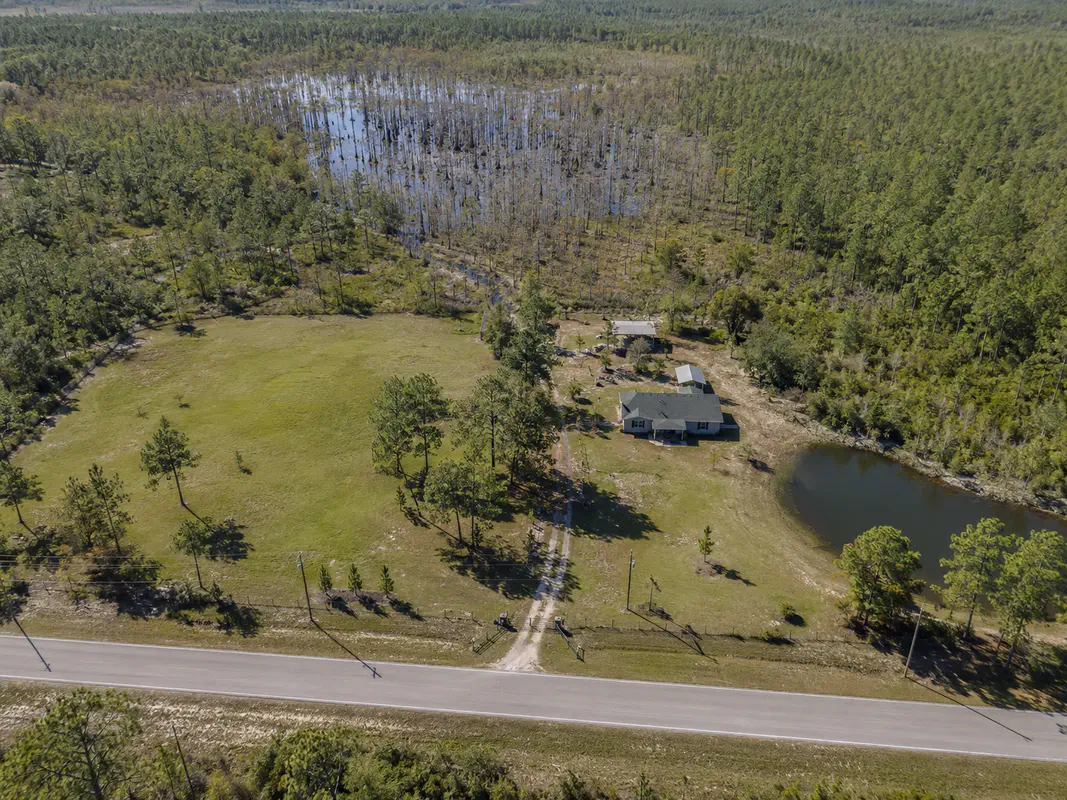
Throughout the North Florida Panhandle — including Washington County, Holmes County, Jackson County, Calhoun County, and inland Bay County — buyers often search for acreage, wooded land, small farms, and rural homes with room to spread out. Those properties can be a great fit when the land actually works for the buyer's plans.
Road frontage, legal access, driveway placement, usable land, drainage, wetlands, utilities, and future division potential can all affect whether rural property is practical, financeable, and worth the asking price. This guide is part of the broader buying property in North Florida due diligence process for buyers evaluating land, acreage, and homes with land.
Why Road Frontage Matters When Buying Rural Property
Road frontage is more than a line on a map. It can affect how you reach the property, where you place a driveway, how utilities are brought in, whether emergency vehicles can access the site, and whether a lender or insurer will treat the parcel as a standard rural purchase.
In many parts of North Florida, a property with frontage on a county-maintained road may be simpler to evaluate than one reached only by a private lane, shared driveway, or recorded easement across someone else's land. That does not mean private access is always a problem. It does mean buyers should understand what they are getting before making an offer.
Frontage can also influence future value. A parcel with clear public access and a practical homesite near the road may appeal to a wider range of buyers later. A larger tract with poor access, limited frontage, or difficult terrain may be harder to finance, improve, or resell even if the acreage total looks impressive in a listing.
Quick Answer
Acreage size alone does not determine whether rural property is usable. Buyers should review road frontage, access type, driveway conditions, drainage, wetlands, utilities, and how much of the land can actually support their intended use.
Public Roads, Private Roads, and Shared Access
Rural properties in North Florida may front a county-maintained road, a state highway, a private road, or a shared access lane. Each setup comes with different practical considerations.
County-maintained roads are often the most straightforward for buyers who want predictable access, mailbox placement, and a route that is generally maintained by a public agency. Even then, buyers should confirm road surface, drainage at the entrance, sight distance, and whether the county has any driveway or culvert requirements.
Private roads and shared access lanes are common on acreage, timberland, and rural residential parcels. These routes may be gravel, dirt, or partially improved. Maintenance may be handled by neighboring owners, a road association, or an informal agreement. Buyers should ask who maintains the road, how costs are shared, and whether the route remains passable after heavy rain.
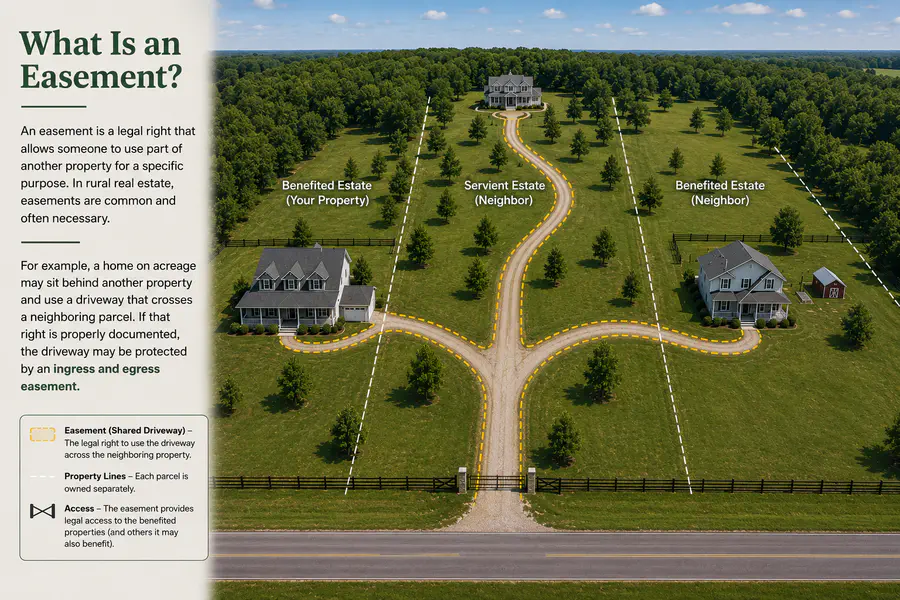
Shared driveways can work well when they are clearly defined, recorded, and maintained. They can also create friction if width, parking, gate access, or maintenance responsibilities are unclear. For a deeper look at recorded easements, ingress and egress rights, and title review, see the guide on easements and legal access for rural property.
Legal Access vs. Practical Access
Legal access and practical access are not always the same thing. A property may have a deeded easement on paper but still present real-world challenges if the route is narrow, poorly maintained, gated without clear rights, flooded seasonally, or difficult for delivery trucks, septic trucks, or emergency vehicles.
Buyers should review the legal description, recorded easements, survey, and title work with the appropriate professionals. They should also drive the access route in different conditions when possible, including after rain if timing allows.
Questions worth asking include:
- Is access by recorded easement, public road frontage, or both?
- What is the easement width and location?
- Is there a gate, and who controls access?
- Who maintains the road or driveway approach?
- Does the route flood, rut, or become impassable seasonally?
- Can larger vehicles reach the homesite if needed?
A property can look accessible during a dry afternoon showing and still be difficult to use during North Florida's wetter seasons. Do not rely only on the listing description or a single visit.
Usable Land Is Not Always the Same as Total Acreage
One of the most important ideas in rural property buying is that total acreage and usable acreage are often different numbers. A listing may advertise twenty acres, but only a portion of that land may be practical for a homesite, pasture, garden, barn, septic field, or future building.
Some acreage is wooded, wet, low, steep, landlocked, cut off by creeks, or otherwise difficult to use. Flood zones, drainage patterns, wetlands, and soil conditions can further reduce the amount of land that supports everyday use. See the guide on flood zones and drainage on rural property for a deeper look at standing water, low areas, and how water movement affects buildable land.
Buyers planning to keep animals, build a shop, clear pasture, or garden should walk the property with their intended use in mind. Ask where the high ground is, where water collects, which areas stay dry, and whether wetlands or conservation limitations affect clearing or improvement plans.
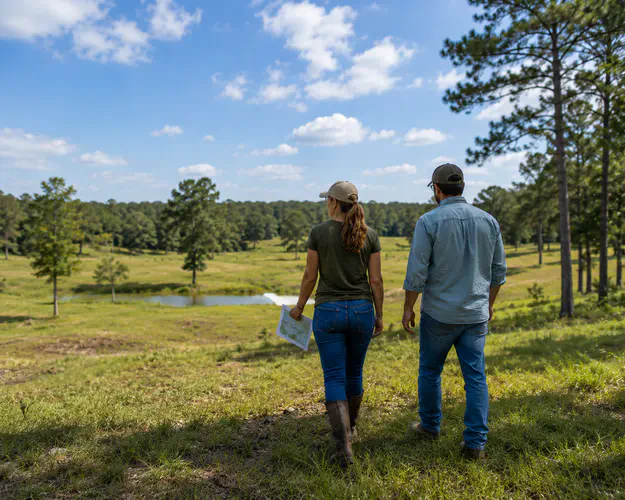
This is also where zoning and property restrictions come into play. A buyer may have usable land on the ground but still face limits on manufactured homes, livestock, outbuildings, or future division. Review the guide on zoning and property restrictions in North Florida alongside frontage and usability research.
Driveways, Culverts, Gates, and Entry Points
Driveway placement is a practical issue that can become expensive quickly. A buyer may need to create a new entrance, widen an existing approach, install a culvert, add a gate, improve drainage at the road edge, or coordinate with the county road department before building or closing.
Counties may review sight distance, driveway location, culvert size, permit requirements, and whether an entrance can be added where the buyer hopes to place it. A parcel with road frontage does not automatically mean any driveway location will be approved.
Existing driveways should also be reviewed carefully. An old entrance may be too steep, too close to a curve, poorly drained, or partially located on an easement. Fence lines, mailboxes, and worn tracks do not always prove that the current access point is the best long-term solution.
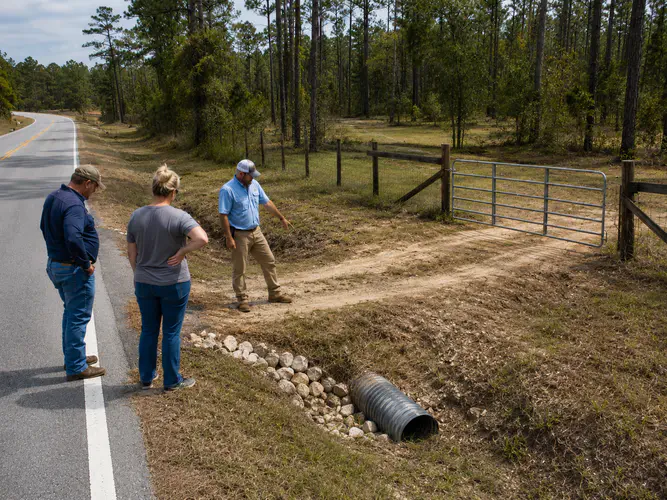
Buyers should confirm driveway and entrance requirements with the county or appropriate road authority before assuming an existing access point will work for their plans.
Road Frontage and Future Property Division
Some buyers purchase acreage with the idea of dividing it later, creating an additional homesite, giving land to family, or selling a portion. Road frontage can play a major role in whether that goal is realistic.
Counties may require minimum lot sizes, minimum road frontage, legal access for each resulting parcel, utility availability, surveys, and compliance with subdivision or land-development rules. A tract may have enough total acreage to divide on paper but still be difficult to split if frontage is limited, access is shared, wetlands reduce usable area, or utility extension costs are high.
Buyers should verify subdivision potential with the county planning or development office and review recorded restrictions that may limit future division. Do not assume a seller's statement about "development potential" is accurate without independent confirmation.
Utilities, Emergency Access, and Daily Convenience
Road frontage and land layout affect more than where you turn in off the road. They can influence utility costs, daily convenience, and how practical the property feels over time.
Power, water, septic, internet, propane, and other services may be more expensive or complicated when the usable homesite sits far from the road or when utilities must cross low or wooded portions of the parcel. See the guide on septic, well, and utilities for rural property for a deeper look at service availability and extension costs.
Daily-life questions matter too. Consider school bus routes, trash pickup, package delivery, fuel delivery, emergency response, and how often you will drive the access road in ordinary weather. A beautiful homesite deep on a large tract may feel less practical if every trip to town starts with a long private lane and a gate.
Insurance and financing conversations may also be affected by access type, road condition, and whether the property appears reachable for emergency services. Buyers should discuss these issues with their lender and insurance provider as part of early due diligence.
Related North Florida Property Guides
What Buyers Should Review Before Making an Offer
Frontage and usability questions should be reviewed early, not after a buyer has already fallen in love with the setting. The following checks can help reduce surprises before closing.
- Confirm road frontage length and access type
- Review surveys, legal descriptions, and recorded easements
- Drive the access route in ordinary and wet conditions when possible
- Ask the county about driveway, culvert, and entrance requirements
- Identify usable high ground and low or wet areas on the parcel
- Review flood maps, drainage patterns, and wetlands concerns
- Estimate utility distance and extension costs to the intended homesite
- Ask about maintenance responsibilities for private roads or shared access
- Verify whether future division or additional homesites are realistic
- Discuss access and usability with lender and insurance contacts when relevant
Buyers evaluating property across the region can also compare county differences on the North Florida Panhandle service areas page. When you are ready to review current listings, use the property search to explore homes, land, and acreage throughout the area.
Many of the issues above also appear in the guide on common mistakes buyers make when buying acreage or homes with land, especially assumptions about usable acreage and unverified access.
Final Thoughts From Doug Hooper
Rural property in the North Florida Panhandle can offer space, privacy, and a practical lifestyle that is hard to find in denser markets. But buyers get the best results when they look beyond acreage totals and ask whether the property actually works.
Road frontage, access quality, driveway placement, usable land, drainage, utilities, and future flexibility all shape the real value of a parcel. Two properties with the same acreage can perform very differently depending on how they are laid out and how they are reached.
My advice for buyers is straightforward: verify the details that matter to your plans, review property conditions on site, and confirm important questions with the county, surveyor, lender, inspector, utility providers, and other appropriate professionals. A property should not just look right online. It should support the way you intend to use it.
This guide was last reviewed and updated in June 2026.
Evaluating Road Frontage or Acreage in North Florida?
Whether you are comparing vacant land, a rural home with acreage, or a small farm property, Doug Hooper, REALTOR® with Century 21 AllPoints Realty, can help you think through access, usability, and practical buyer questions before you make an offer.
Search Properties Contact Doug