
Buying rural property in North Florida often involves more than comparing bedrooms, acreage totals, price per acre, or the condition of the home. Access can be just as important as the house, land, utilities, septic system, well, fencing, barns, workshops, or outbuildings.
Many buyers moving to inland North Florida are not only looking for vacant land. They are often searching for rural homes with acreage, manufactured homes on land, small farms, workshops, barns, or quieter properties outside larger suburban areas.
A property may look fully usable because there is a driveway, gate, private road, or visible path leading to it. But physical access and legal access are not always the same thing. In rural areas, a driveway may cross neighboring land, a private road may serve several homes, or an older access arrangement may have been used for years without clear written documentation.
For buyers looking at rural homes, acreage properties, land with improvements, or future homesites, understanding easements and legal access is a major part of due diligence — especially alongside the broader buying property in North Florida guide.
Why Legal Access Matters for Rural Homes and Acreage
In town or in a typical subdivision, most homes connect directly to publicly maintained streets. Access is usually obvious and rarely becomes a major issue.
Rural property is different.
Across the North Florida Panhandle, buyers may encounter:
- Homes located on long private roads
- Shared driveways serving multiple properties
- Acreage homes behind another parcel
- Manufactured homes on rural tracts
- Older family land divisions
- Hunting or recreational tracts with informal access
- Small farms with barns, gates, fencing, or equipment access needs
- Properties where utility access crosses neighboring land
In many cases, these situations are normal and manageable. The concern is not that rural properties sometimes use private access. The concern is whether that access is legally protected, practical, and clearly understood before closing.
A buyer may be able to drive to a home today because the current owner and neighbors have always allowed it. But verbal permission, habit, or neighborly understanding is not the same as recorded legal access.
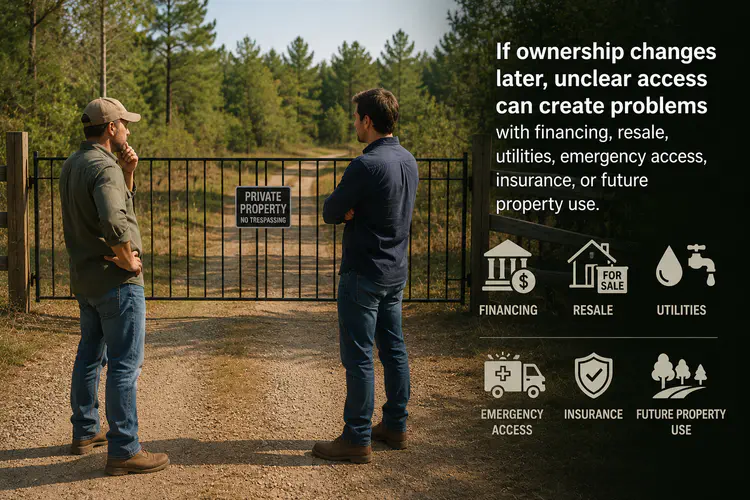
If ownership changes later, unclear access can create problems with financing, resale, utilities, emergency access, insurance, or future property use.
What Is an Easement?
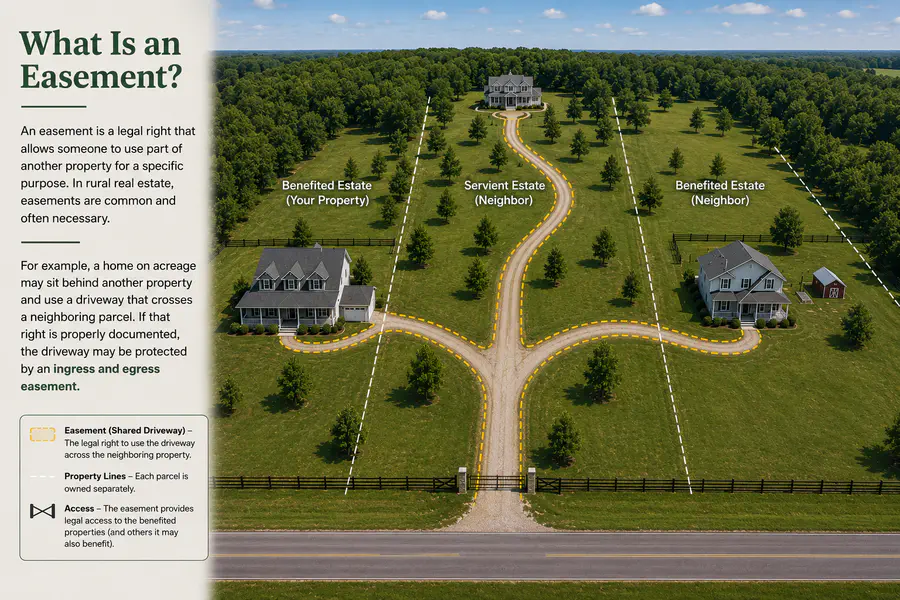
An easement is a legal right that allows someone to use part of another property for a specific purpose. In rural real estate, easements are common and often necessary.
For example, a home on acreage may sit behind another property and use a driveway that crosses a neighboring parcel. If that right is properly documented, the driveway may be protected by an ingress and egress easement.
Common rural property easements include:
- Ingress and egress easements for entering and exiting the property
- Shared driveway easements for homes using the same access route
- Utility easements for power lines, water lines, or communication service
- Drainage easements for water flow or stormwater management
- Agricultural access easements for farm or timber use
- Conservation easements that may limit certain land uses
Easements are not automatically negative. Many rural homes, farms, and acreage properties function perfectly well with recorded easements. The key is making sure the easement is documented, understandable, and compatible with how the buyer plans to use the property.
Legal Access Is Not Just a Vacant Land Issue
Access problems can affect improved properties too.
A rural home may already have a driveway, mailbox, fencing, barns, sheds, or a workshop. That can make the property feel established and straightforward. But buyers still need to understand whether the access route is public, private, shared, recorded, or informal.
This matters for normal rural living. Buyers may need access for:
- Daily driving
- Mail and delivery service
- School buses
- Emergency vehicles
- Utility trucks
- Septic or well service vehicles
- Livestock trailers
- RVs, boats, or equipment trailers
- Tractors, mowers, or farm equipment
- Future home additions or construction work
A narrow dirt road may be fine for a pickup truck but difficult for a fire truck, moving truck, concrete truck, utility crew, or trailer. A shared driveway may be usable day to day but unclear when it comes to maintenance costs, widening, grading, or future improvements.
For rural buyers, the practical question is not only, “Can I get to the property?” It is also, “Can I legally, reliably, and practically use this access for how I plan to live?”
Understanding Landlocked or Limited-Access Property
A landlocked property is a parcel without legal access to a public road. This issue is often discussed with vacant land, but it can also affect rural tracts near homes, inherited property, older family divisions, or acreage that has been split over time.
Landlocked or limited-access situations may result from:
- Older family land divisions
- Informal historical access
- Missing recorded easements
- Survey or boundary confusion
- Property splits that did not preserve road access
- Private roads that were never clearly documented
These situations can affect value and usability. A property may look attractive because of acreage, privacy, or price, but unclear access can limit financing options, complicate title insurance, reduce resale appeal, or make future improvements difficult.
In some cases, access issues can be resolved. But buyers should not assume they will be simple, fast, or inexpensive to fix after closing.
Private Roads and Shared Driveways
Private roads are common throughout rural North Florida. Some are well maintained and serve established homes. Others may be sandy, narrow, low-lying, or difficult during heavy rain.
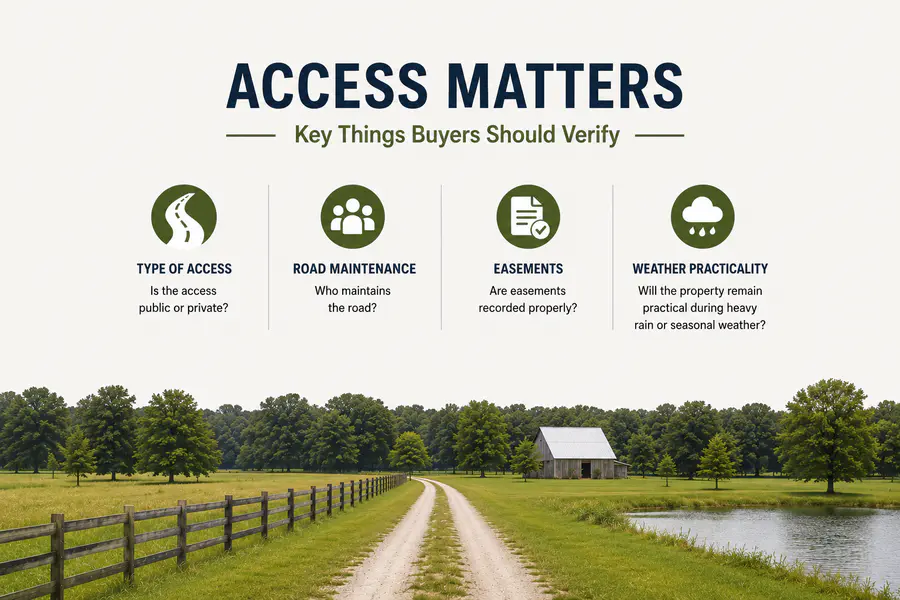
Before buying a rural home or acreage property on a private road, buyers should ask:
- Is the road publicly or privately maintained?
- Who owns the road?
- Who has the right to use it?
- Is there a recorded road maintenance agreement?
- Do all property owners share maintenance costs?
- Can the road support emergency vehicles and service trucks?
- Does the road flood, wash out, or become difficult after rain?
- Are there gates, locks, or access restrictions?
A private road does not automatically make a property undesirable. In fact, many buyers prefer the privacy that rural private roads can provide. The important part is understanding the arrangement before purchasing.
Utility Access Matters Too
Legal access is not limited to the driveway or road. Rural buyers should also think about utility access — a topic covered in more detail in the guide to septic, wells, and utilities for rural property.
A property with a home may already have power, well, septic, and internet service. But buyers should still understand how those utilities reach the property and whether any utility easements are involved.
For unimproved acreage or properties with future building plans, utility access becomes even more important. Buyers may need to know whether power lines, water lines, or communication service can legally cross neighboring land.
This is especially important when a buyer plans to:
- Build a home
- Add a barn or workshop
- Install a second meter
- Improve a driveway
- Bring service to a homesite farther from the road
- Use the property for livestock, equipment, or rural business needs
Utility availability and legal utility access can affect the real cost and practicality of a rural property.
Why Surveys and Title Work Matter
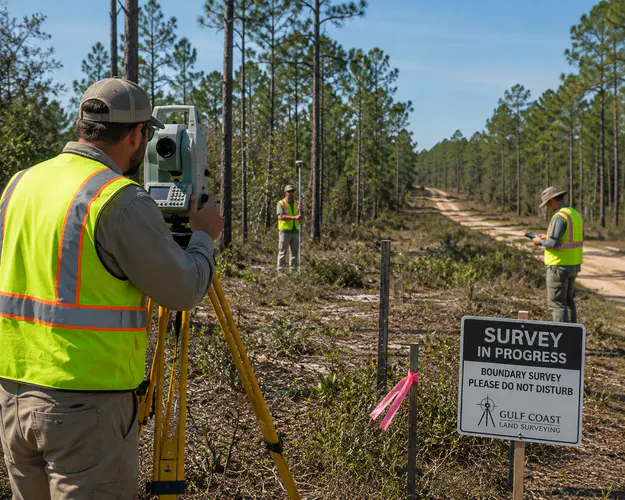
Buyers should avoid relying only on aerial maps, listing photos, driveway location, fence lines, or verbal explanations when evaluating rural access.
A survey can help identify:
- Property boundaries
- Driveway location
- Easement location
- Road frontage
- Encroachments
- Access width
- Relationship between improvements and boundary lines
Title work can help identify:
- Recorded access easements
- Utility easements
- Restrictions
- Prior agreements
- Legal descriptions
- Potential title concerns
In rural areas, the way a property is physically used does not always match the way access is legally described. A driveway may not be exactly where the recorded easement is located. A gate may not sit on the boundary line. A road may have been used for years without the documentation a buyer expects to see.
That is why survey and title review are important parts of rural property due diligence.
Questions Buyers Should Ask Before Closing
Before buying a rural home, acreage property, homesite, or land with improvements, buyers should ask practical access questions early in the process.
- Does the property connect directly to a public road?
- If not, is there a recorded easement?
- Is the driveway private, shared, or public?
- Who maintains the road or driveway?
- Is there a written road maintenance agreement?
- Can emergency vehicles reach the home?
- Can utility trucks, trailers, or construction vehicles use the access?
- Does the access road flood or become soft after heavy rain?
- Are there gates, locks, or shared entry points?
- Are utilities covered by easements if they cross another property?
- Does title work confirm legal access?
- Has the property been surveyed recently?
These questions are not meant to scare buyers away from rural property. They are meant to help buyers understand what they are purchasing before they commit.
Access Can Affect Long-Term Rural Property Value
Access quality can affect how usable, financeable, and marketable a rural property is over time.
A rural home on five acres with clear road frontage, reliable driveway access, and established utilities may be more practical for many buyers than a larger property with unclear access, poor road conditions, or unresolved easement questions. For a broader look at frontage, usable acreage, and driveway practicality, see the guide on road frontage and land usability in North Florida.
Access can influence:
- Resale appeal
- Financing options
- Insurance considerations
- Emergency response
- Daily convenience
- Construction feasibility
- Future improvements
- Utility service
- Long-term maintenance costs
Rural buyers often focus first on acreage, privacy, and price when browsing rural homes and acreage properties in North Florida. Those things matter. But access is what determines how easily the property can actually be lived on, improved, maintained, and eventually resold.
Final Thoughts on Easements and Rural Property Access
Easements, private roads, and shared driveways are common throughout rural North Florida. They are not automatically a problem, and many rural homes and acreage properties rely on them without issue.
The important part is knowing what exists before closing.
Buyers should understand how the property is accessed, whether that access is legally documented, who maintains the road, whether utilities are protected, and whether the access supports the way they plan to live on or use the property.
Whether a buyer is considering a home on acreage, a manufactured home with land, a rural homesite, a small farm, or vacant acreage for future plans, access should be part of the due diligence conversation — along with zoning and property restrictions and the common mistakes buyers make with acreage and homes with land.
Frequently Asked Questions
Do easements only matter when buying vacant land?
No. Easements can also affect rural homes, acreage properties, manufactured homes with land, shared driveways, farms, workshops, barns, and properties located on private roads.
What is an ingress and egress easement?
An ingress and egress easement gives someone the legal right to enter and exit a property, usually by using a driveway, road, or access path that may cross another property.
Are private roads common with rural homes in North Florida?
Yes. Many rural homes and acreage properties in the North Florida Panhandle are located on private roads or shared driveways. Buyers should understand who maintains the road and whether access rights are recorded.
Can access affect financing or resale?
Yes. Unclear legal access, poor road conditions, or unresolved easement issues can affect financing, title insurance, resale appeal, and long-term usability.
Should I get a survey when buying rural property?
A survey is strongly recommended for many rural property purchases because it can help verify boundaries, easements, road frontage, driveway placement, encroachments, and access locations.
This guide was last reviewed and updated in June 2026.
Looking at rural property in the North Florida Panhandle?
Doug Hooper, REALTOR® with Century 21 AllPoints Realty, helps buyers evaluate rural homes, acreage, land, access, utilities, and practical property considerations throughout the North Florida Panhandle.
Search Rural Properties Contact Doug