
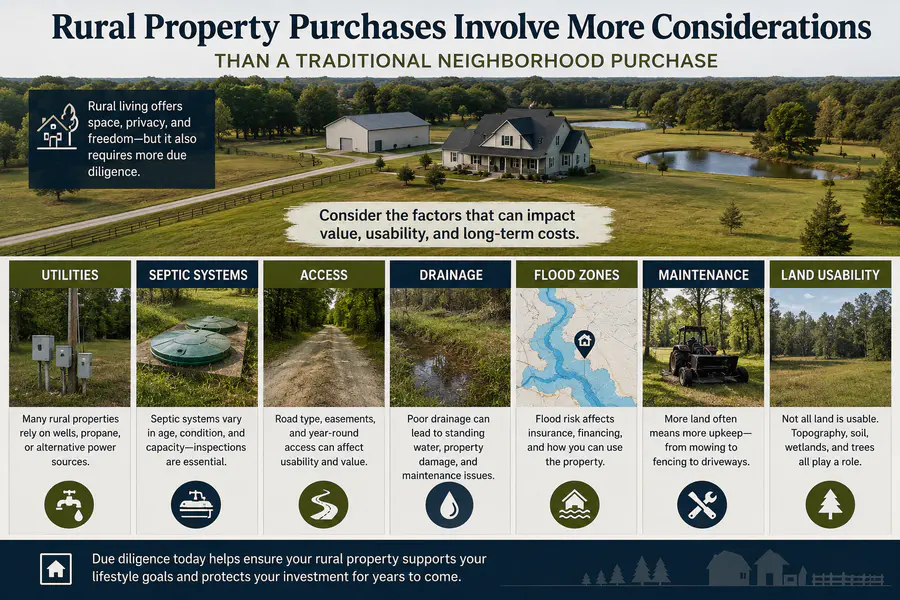
Acreage and homes with land appeal to many buyers because they offer more privacy, flexibility, outdoor space, and distance from dense subdivisions or crowded coastal markets. Throughout the North Florida Panhandle, many buyers are looking for properties that support a quieter lifestyle, workshops, animals, gardens, storage space, or simply more room to spread out.
But rural property purchases often involve more considerations than a traditional residential neighborhood purchase. Utilities, septic systems, access, drainage, flood zones, maintenance, and land usability can all affect whether a property truly fits a buyer’s goals.
These types of rural property considerations commonly affect buyers throughout Washington County, Holmes County, Jackson County, Calhoun County, and inland areas of Bay County.
Many North Florida acreage properties may include manufactured homes, workshops, barns, sheds, or additional structures that require careful inspection and due diligence.
1. Assuming All Acreage Is Fully Usable
One of the most common mistakes is assuming every acre shown in a listing can be used the same way. Some portions of a property may include wetlands, low-lying areas, drainage concerns, flood-prone sections, easements, or dense wooded areas that limit usability.
Buyers should evaluate where the usable high ground sits, how water moves through the property, whether access is practical, and how the layout supports future plans such as building, fencing, workshops, gardens, or recreational use. See the dedicated guide on road frontage and land usability in North Florida for a deeper look at usable acreage, driveway placement, and practical access.
Practical buyer question
Does the property actually support the way you plan to live, build, store equipment, or use the land long-term?
2. Not Verifying Legal Access and Road Conditions
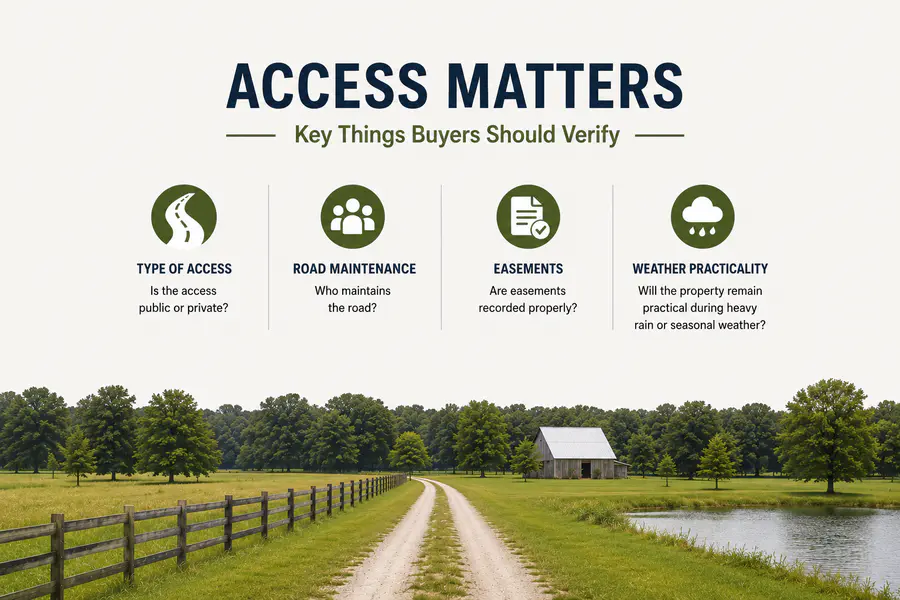
Access is one of the most important considerations with rural property. Some homes and acreage parcels sit directly on paved county roads, while others rely on dirt roads, easements, or shared access routes.
Buyers should understand whether access is public or private, who maintains the road, whether easements are recorded properly, and whether the property remains practical during heavy rain or seasonal weather conditions. The guide on easements and legal access covers recorded access rights, while road frontage and land usability covers frontage, driveways, and day-to-day access practicality.
3. Overlooking Septic, Well, and Utility Considerations
Many rural homes and acreage properties throughout North Florida rely on private septic systems and wells instead of public utilities. Buyers should not assume utility availability simply because a property already has a home on it.
Septic systems have age, size, maintenance, and location considerations. Wells may require water testing, equipment review, or future servicing. Internet availability can also vary significantly in rural areas.
Utility due diligence should happen early so buyers understand potential maintenance, replacement, or upgrade costs before closing.
Related guide
Read Septic, Well, and Utility Considerations for Rural Property. For a broader land-buying overview, see What to Know Before Buying Property in North Florida.
4. Focusing on the Land but Overlooking the Home
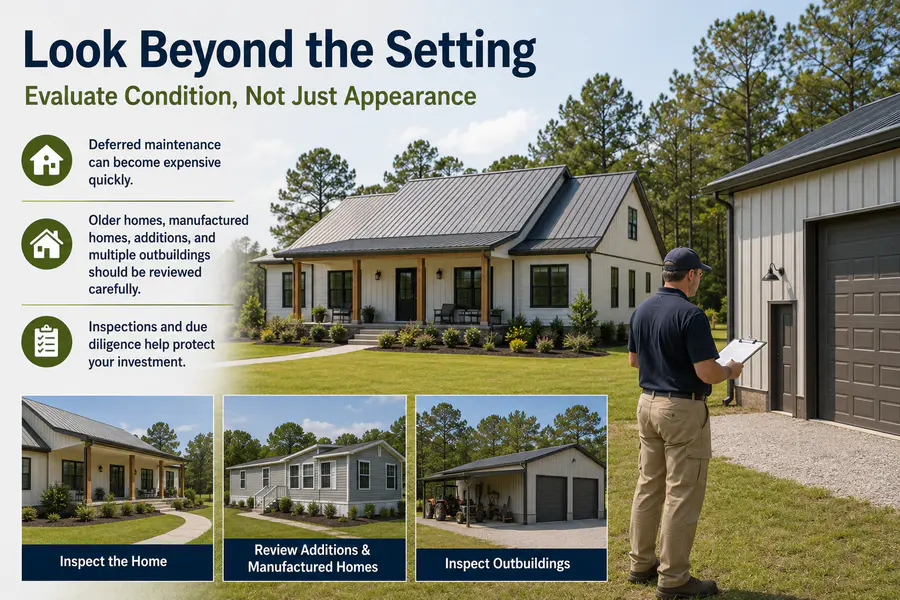
When a property includes both a home and acreage, buyers need to evaluate more than the amount of land. The condition of the house, roof, HVAC system, plumbing, electrical systems, driveway, fencing, workshops, barns, sheds, and other improvements can all affect the true cost of ownership.
A rural home on several acres may look appealing because of the setting, but deferred maintenance can become expensive quickly. Older homes, manufactured homes, additions, and multiple outbuildings should all be reviewed carefully during inspections and due diligence.
5. Ignoring Flood Zones and Drainage Conditions
Flood zones and drainage matter throughout the Florida Panhandle. Some properties may appear dry during a showing while still having seasonal drainage issues or low-lying areas.
Buyers should review flood maps, drainage patterns, nearby creeks or ponds, culverts, ditches, and elevation changes. Flood risk can affect insurance, financing, septic placement, construction, and long-term maintenance. See the dedicated guide on flood zones and drainage on rural property for a deeper look at FEMA maps, standing water, and land usability.
6. Not Understanding Zoning and Property Restrictions
Buyers sometimes assume acreage automatically allows any type of use. In reality, zoning, deed restrictions, county rules, environmental limitations, and subdivision covenants can affect whether a property can support animals, manufactured homes, workshops, business use, RV storage, or future land division. See the dedicated guide on zoning and property restrictions in North Florida for a deeper look at land-use classifications, deed covenants, HOA rules, and county requirements.
Before purchasing rural property, buyers should verify whether the property supports their intended use both now and in the future.
7. Underestimating Ongoing Rural Property Maintenance
Homes with land often require more maintenance than smaller residential lots. Long driveways, fencing, gates, drainage areas, wooded sections, septic systems, wells, and outbuildings all add to long-term upkeep.
Buyers should realistically consider whether the property size, maintenance demands, and long-term responsibilities fit their lifestyle and budget.
Common additional costs
- Driveway maintenance, fencing, mowing, septic servicing, well equipment, clearing, drainage work, and outbuilding repairs
Better question: What will it realistically cost to maintain this property over time?
8. Buying Based Only on Price Per Acre
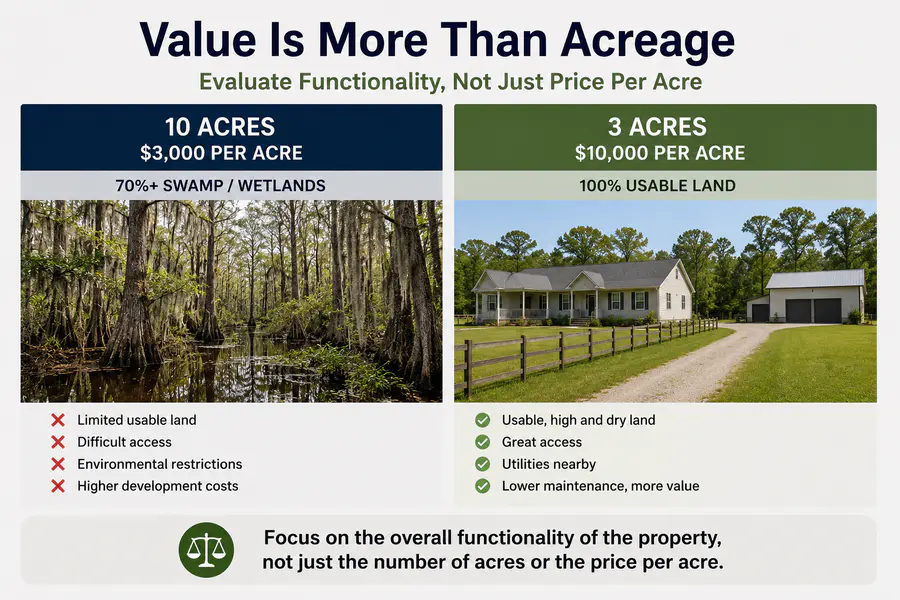
Price per acre alone rarely tells the full story. A smaller property with better access, usable land, nearby utilities, and a well-maintained home may ultimately provide better long-term value than a larger property with hidden issues.
Buyers should evaluate the overall functionality of the property rather than focusing only on acreage totals or asking price.
Questions Buyers Should Ask Before Purchasing Rural Property
- Does the property have clear legal access?
- Is the road public, private, paved, or shared?
- How old are the septic system and well?
- Is internet service available?
- Are there flood zone or drainage concerns?
- What condition are the home and outbuildings in?
- Does zoning support the intended use?
- What maintenance costs should be expected?
- How practical is the location for daily life?
- Does the property truly fit long-term plans?
Where Buyers Commonly Search for Homes With Land
Homes with acreage and rural property are common throughout areas of Washington County, Holmes County, Jackson County, Calhoun County, and parts of Bay County.
Each county offers different property types, road systems, land layouts, and rural living considerations. Buyers should evaluate each property individually rather than assuming all acreage properties function the same way.
Buyers relocating from larger metro areas may also find the regional overview helpful on the Moving to the North Florida Panhandle guide.
Explore North Florida service areas
Learn more about county-by-county differences on the North Florida Panhandle service area guide.
Final Guidance for Buyers Considering Homes With Land
Acreage and homes with land can provide flexibility, privacy, and a different pace of life than traditional residential neighborhoods, but buyers should approach rural property carefully and realistically.
Understanding utilities, maintenance, access, flood concerns, zoning, and long-term usability can help buyers avoid expensive surprises and make better long-term property decisions.
Frequently Asked Questions
What is one of the biggest mistakes buyers make when purchasing acreage?
One of the biggest mistakes is assuming all acreage is usable without reviewing access, flood zones, utilities, drainage, and zoning restrictions.
What should buyers evaluate when purchasing a home with land?
Buyers should evaluate the home itself, septic system, well, utilities, roof, HVAC, driveway, fencing, workshops, barns, and long-term maintenance responsibilities.
Why is due diligence important with rural property?
Rural properties often involve unique considerations including utilities, drainage, flood zones, access, zoning, septic systems, and maintenance that may not apply to typical subdivision homes.
This guide was last reviewed and updated in June 2026.
Thinking about buying acreage or a home with land in the North Florida Panhandle?
Doug Hooper REALTOR® helps buyers evaluate homes, acreage, rural property, and relocation opportunities throughout the North Florida Panhandle.
Contact Doug