
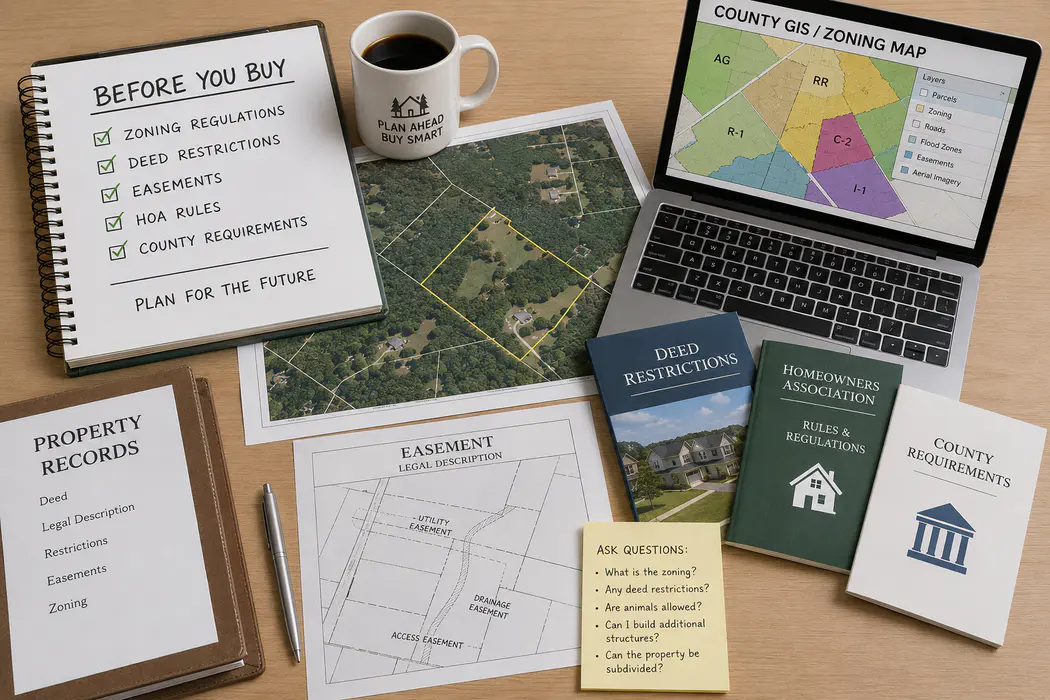
Whether you're planning to build a home, place a manufactured home, raise livestock, operate a business, subdivide land, or add outbuildings, understanding restrictions before closing can help prevent expensive surprises.
Why Zoning Matters When Buying Rural Property
Zoning is one of the first issues buyers should understand when evaluating rural property in North Florida. It helps determine how land may be used, what types of structures may be allowed, and whether certain activities are permitted on a parcel.
A common mistake buyers make is assuming that rural land is automatically unrestricted. While some parcels may offer a great deal of flexibility, others may still have zoning limitations, deed restrictions, homeowners association rules, recorded covenants, setback requirements, or other county-level rules that affect how the property can be used.
Zoning exists to help separate incompatible land uses and protect neighboring property owners. For example, a county may treat residential acreage differently than commercial property, agricultural land, or mixed-use land. A parcel may appear rural, open, and private, but still fall under a zoning classification that limits future building, livestock, business activity, manufactured homes, or subdivision.
For buyers, zoning is not just a technical detail. It directly affects whether a property fits your long-term plans. A parcel that looks perfect online may not work if you cannot build the type of home you want, place the structure you planned, keep animals, operate a home-based business, or divide the acreage later.
Quick Answer
Zoning determines how land may be used and developed. Buyers should verify zoning classifications, deed restrictions, HOA requirements, easements, and county regulations before purchasing property in North Florida.
Understanding Common Zoning Classifications
Zoning classifications vary by county, and each county may define its land-use categories differently. A zoning label in Washington County may not mean exactly the same thing as a similar label in Holmes County, Jackson County, Calhoun County, or Bay County.
That is why buyers should avoid relying only on listing descriptions. A property may be described as "rural," "agricultural," "residential," or "unrestricted," but the official zoning and recorded restrictions should still be verified through the appropriate county office or planning department.
Common zoning classifications buyers may encounter include agricultural, residential, commercial, mixed-use, and rural residential.
Agricultural zoning may allow certain farming or livestock-related uses, but it does not automatically mean every agricultural activity is permitted. Some agricultural parcels may still have limits on structures, density, setbacks, or non-farm business activity.
Residential zoning is usually intended for homes and related residential uses. In rural areas, this may include single-family homes, manufactured homes in some locations, or accessory structures, but the details depend on the county and any recorded restrictions.
Commercial zoning is intended for business activity. Buyers looking at property for a shop, office, storage yard, roadside business, or other commercial use should confirm whether the specific activity is allowed.
Mixed-use zoning may allow more than one type of use, but buyers should still verify exactly what is permitted. "Mixed-use" does not mean unlimited use.
Rural residential zoning is common in areas where homes, acreage, and limited agricultural uses may exist together. This type of classification may offer flexibility, but it can still include important limits on animals, structures, mobile homes, density, or development.
Common Property Restrictions Buyers Encounter
Zoning is only one part of the restriction picture. Some properties have private restrictions that are separate from county zoning rules.
Deed restrictions, recorded covenants, subdivision rules, architectural controls, and homeowners association requirements can all affect how a property may be used. These restrictions may be recorded in public records and can remain attached to the property even when ownership changes.
Buyers sometimes assume that restrictions only apply in suburban neighborhoods, gated communities, or planned subdivisions. In reality, restrictions may also exist on rural acreage, small subdivisions, private roads, large lots, and properties outside city limits.
Common restrictions may involve minimum home size, exterior building materials, roof type, number of structures, use of RVs, manufactured homes, livestock, fencing, business activity, temporary living arrangements, or property maintenance.
A parcel may have the correct zoning for your intended use but still be limited by private restrictions. For example, county zoning may allow manufactured homes in a certain area, but a recorded deed restriction may prohibit them. Another property may be zoned for rural residential use but have covenants that limit livestock, restrict temporary RV use, or control the type of home that can be built.
This is why buyers should review both public zoning information and recorded property documents before closing. Zoning should also be reviewed alongside easements and legal access, flood zones and drainage, and septic, well, and utility considerations as part of the broader buying property in North Florida due diligence process.
Can You Place a Manufactured Home?
Manufactured homes are a high-interest topic for many North Florida buyers, especially those looking for affordable housing options, family land, acreage, or rural property outside larger towns.
The answer depends on several factors. Buyers should verify county regulations, parcel zoning, deed restrictions, HOA limitations, age requirements, size requirements, and installation standards before assuming a manufactured home can be placed on a property.
Some areas allow manufactured homes with proper permits and inspections. Other areas may limit them based on zoning classification, subdivision restrictions, or recorded covenants. In some cases, manufactured homes may be allowed only if they meet certain age, size, foundation, tie-down, skirting, or appearance requirements.
Buyers should also consider whether the property has suitable access, septic approval, well availability, power access, and enough usable land for the home site. A property may technically allow a manufactured home but still require additional work before it is buildable or livable.
Before making an offer, buyers should ask direct questions:
- Is the parcel zoned for manufactured homes?
- Are there deed restrictions prohibiting them?
- Does the county have age or installation requirements?
- Is the property inside an HOA or restricted subdivision?
- Will the septic system, well, and power setup support the intended home?
A manufactured home can be a practical option in many rural areas, but it should be verified before closing.
Livestock, Farming, and Agricultural Uses
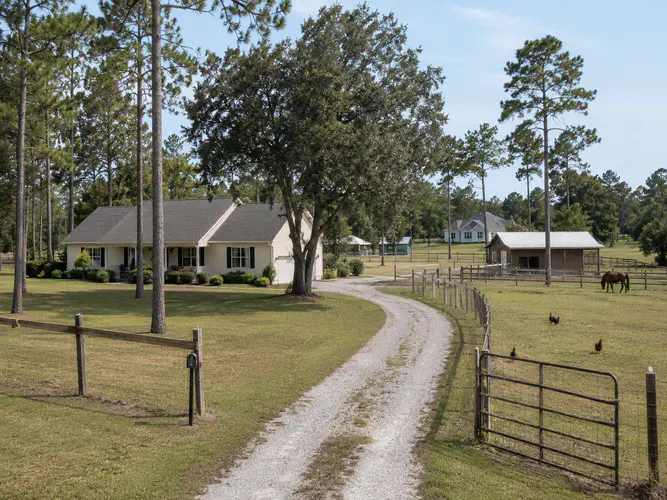
Many buyers are drawn to North Florida because they want space for horses, chickens, goats, gardens, small farms, or a quieter acreage lifestyle. Rural property can provide excellent opportunities for that type of living, but livestock and agricultural use should still be verified.
Just because a property has open land does not always mean every type of animal or farming activity is allowed. Zoning, parcel size, setbacks, county ordinances, deed restrictions, and HOA rules may all affect what is permitted.
A buyer planning to keep horses should consider pasture quality, fencing, water access, shelter, drainage, and whether the land has enough usable acreage. A buyer interested in chickens or goats should verify whether there are any restrictions on animal type, number of animals, enclosures, or nuisance concerns.
Small farming uses may also depend on how the property is classified and whether the activity is personal, agricultural, or commercial. Selling products, operating a farm stand, boarding animals, or running an agricultural business may raise different zoning questions than simply keeping animals for personal use.
This is an area where practical experience matters. Living on acreage in the North Florida Panhandle has taught me that the visible land is only one part of the decision. Buyers also need to understand drainage, fencing, access, utilities, pasture condition, and the rules that affect how the property can actually be used.
Building Additional Structures
Many rural buyers want more than a house. They may want a workshop, barn, detached garage, pole barn, equipment shelter, guest house, garden shed, or other accessory building.
Before buying, it is important to confirm whether those structures are allowed and what rules apply. Counties may have permitting requirements, setback rules, height limits, size limits, utility requirements, septic considerations, and building-code requirements.
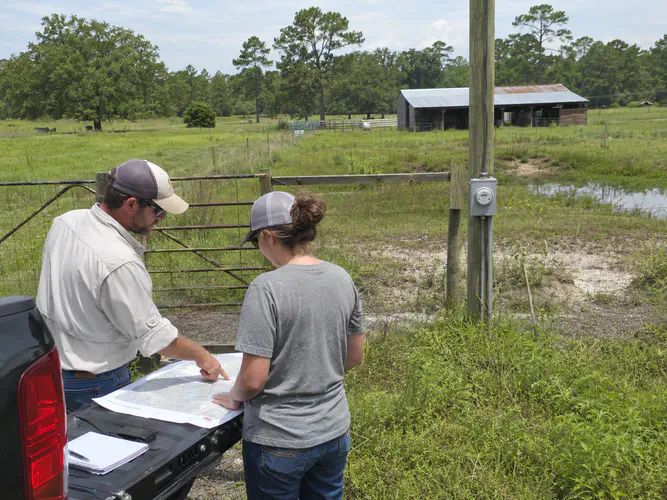
Setbacks are especially important. A setback determines how far a structure must be from property lines, roads, easements, wetlands, water bodies, or other features. A parcel may look large enough for a workshop or barn, but the usable building area may be reduced by setbacks, drainage areas, flood zones, easements, or septic placement.
Accessory dwellings and guest houses can raise additional questions. A detached workshop may be treated differently than a guest cottage, mother-in-law suite, rental unit, or second residence. Buyers should verify whether additional living space is allowed and whether it requires separate septic, utilities, address assignment, or special approval.
A good rule for buyers is simple: do not assume that extra land automatically means extra building rights. Confirm the rules before closing.
Subdivision and Future Development Restrictions
Some buyers purchase acreage with the idea of splitting it later, selling a portion, giving land to family, or creating additional homesites. This can be a reasonable long-term goal, but subdivision rules should be reviewed carefully before purchase.
Counties may have minimum lot-size requirements, road frontage requirements, access requirements, utility requirements, survey requirements, and platting rules. A parcel may have enough total acreage on paper but still be difficult or impossible to split if it lacks legal access, proper road frontage, or suitable utility options.
For example, landlocked acreage, narrow parcels, private-road parcels, and properties with wetlands or flood-prone areas may create complications. Even when division is allowed, the process may require county review, surveys, legal descriptions, driveway approvals, septic evaluations, and compliance with local land-development regulations.
Buyers should also consider whether deed restrictions or prior subdivision documents limit future division. In some cases, a seller may advertise acreage as having "development potential," but buyers should verify that claim independently.
This topic connects closely with road frontage and land usability because access, frontage, and practical buildable area often determine whether land can be developed, divided, or improved.
Related North Florida Property Guides
Questions Buyers Should Ask Before Closing
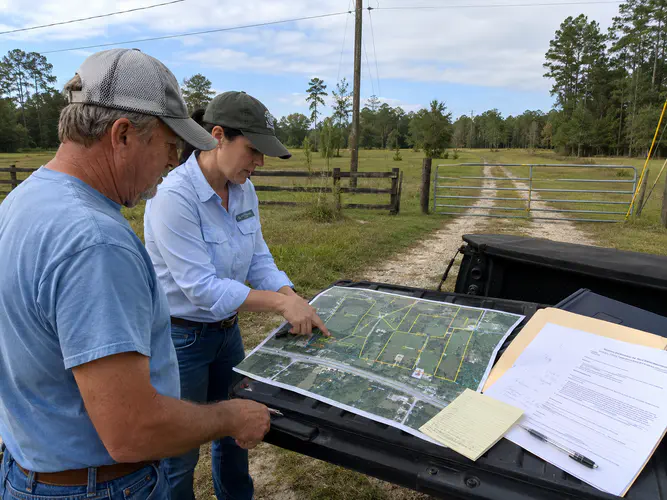
Zoning and restrictions should be reviewed early in the buying process. Waiting until the end of the transaction can create stress, delays, or unexpected problems.
Before closing on rural property in North Florida, buyers should ask:
- What is the current zoning classification?
- Does the zoning allow my intended use?
- Are there deed restrictions or recorded covenants?
- Is the property part of an HOA or private subdivision?
- Are livestock permitted?
- Are chickens, horses, goats, or other animals limited?
- Are manufactured homes allowed?
- Are there age, size, or installation requirements for manufactured homes?
- Can additional structures be built?
- Are workshops, barns, garages, or pole barns allowed?
- Are there setback requirements?
- Are there easements affecting the property?
- Can the property be subdivided later?
- Are there minimum lot-size requirements?
- Is there enough road frontage?
- Are utilities available or reasonably accessible?
- Will septic and well requirements affect the planned use?
- Are there flood zones, wetlands, or drainage concerns?
Not every property will require every question, but buyers should slow down and verify the issues that matter to their intended use.
The goal is not to make rural property feel complicated. The goal is to avoid surprises. Most issues are easier to deal with before closing than after ownership changes.
Final Thoughts for North Florida Property Buyers
Rural property in North Florida can offer space, privacy, flexibility, and a lifestyle that is difficult to find in more developed areas. But flexibility does not always mean unrestricted use.
Zoning classifications, deed restrictions, HOA rules, easements, setbacks, manufactured home rules, livestock limitations, and subdivision requirements can all affect whether a property fits your goals.
The good news is that many of these issues can be identified before closing. Buyers who verify information early are in a much stronger position to make informed decisions.
Before purchasing land, acreage, or a rural home, review county zoning information, check public records, ask about recorded restrictions, and confirm important details directly with the appropriate county planning or building department.
A property should not just look right. It should work for the way you plan to use it.
Frequently Asked Questions
Can zoning change after I buy property?
Yes, zoning can change, but it usually requires a formal county or local government process. Buyers should verify current zoning before purchase and understand that future changes are not guaranteed. If your plans depend on a zoning change, that should be treated as a risk until confirmed through the proper county process.
Does agricultural zoning automatically allow livestock?
Not always. Agricultural zoning may support certain agricultural uses, but livestock rules can still depend on county regulations, parcel size, setbacks, deed restrictions, and nuisance rules. Buyers should verify the specific animals and intended use before closing.
Can I place a manufactured home on any rural parcel?
No. Manufactured homes may be allowed on some rural parcels, but not all. County zoning, subdivision restrictions, deed restrictions, HOA rules, age requirements, size requirements, and installation standards may all apply.
Are deed restrictions different from zoning?
Yes. Zoning is controlled by local government, while deed restrictions are private restrictions recorded against the property. A property may comply with zoning but still be limited by deed restrictions or covenants.
Can I build a workshop or barn without permits?
In many cases, permits may be required for workshops, barns, garages, pole barns, or other accessory structures. Requirements vary by county and structure type. Buyers should verify permitting, setbacks, size limits, and building requirements before planning improvements.
This guide was last reviewed and updated in June 2026.
Thinking About Buying Rural Property in North Florida?
Whether you're evaluating zoning, access, drainage, septic suitability, or land usability, Doug Hooper, REALTOR® with Century 21 AllPoints Realty, can help you understand important property considerations before you buy.
Search Properties Contact Doug