
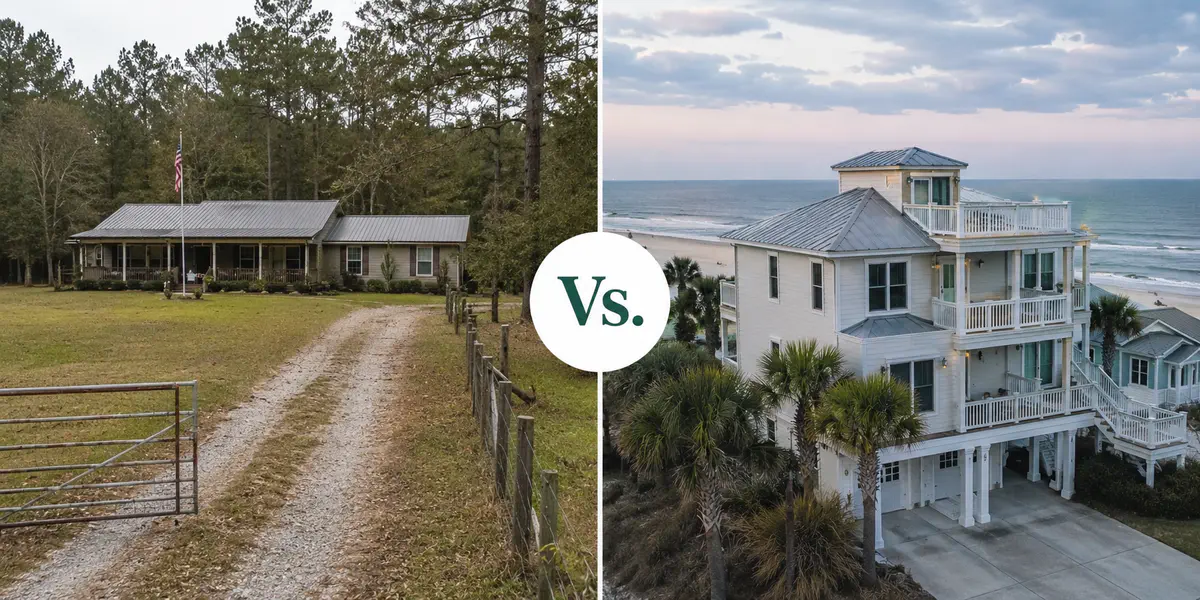
Why More Buyers Are Exploring Inland Areas
Many buyers moving to the Florida Panhandle begin their search focused on coastal communities because those areas are more visible online and in tourism marketing.
Over time, however, some buyers expand their search into inland counties and smaller communities after considering property size, traffic patterns, long-term affordability, privacy, commuting preferences, and pace of life.
Inland communities throughout the North Florida Panhandle often appeal to buyers looking for:
- more land
- quieter surroundings
- lower-density neighborhoods
- workshops and outdoor space
- rural homes and acreage
- reduced tourism activity
- practical long-term living environments
For some buyers, inland living also provides access to Gulf Coast destinations without requiring them to live directly within heavily seasonal or tourism-oriented areas across North Florida Panhandle communities.
Pace of Life and Daily Living Differences
One of the biggest differences between inland and coastal living is the overall pace and rhythm of daily life.
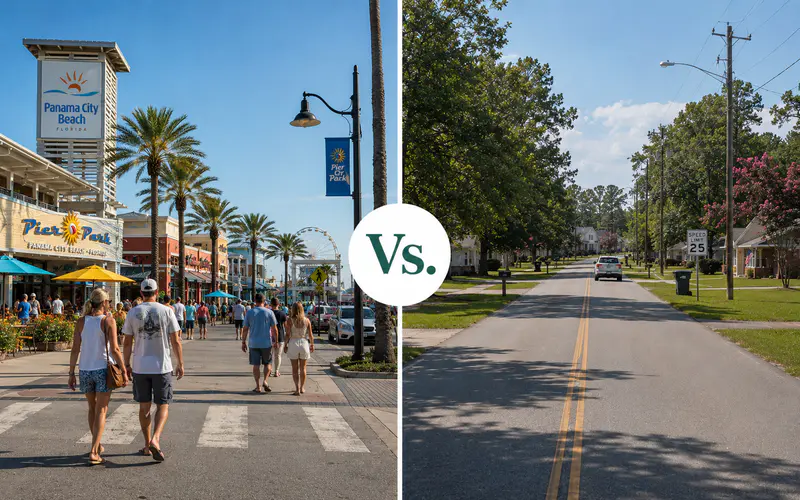
Coastal communities often provide easier access to beaches, restaurants, tourism infrastructure, entertainment, and seasonal events. Many buyers enjoy the energy and convenience that comes with living closer to Gulf destinations and larger coastal hubs.
Inland communities, by comparison, often feel quieter and more residential. Daily routines may center more around local schools, outdoor space, small-town services, agricultural areas, and regional commuting patterns rather than tourism activity.
For buyers relocating from larger metro areas, inland communities sometimes provide a lifestyle that feels less crowded and more predictable year-round.
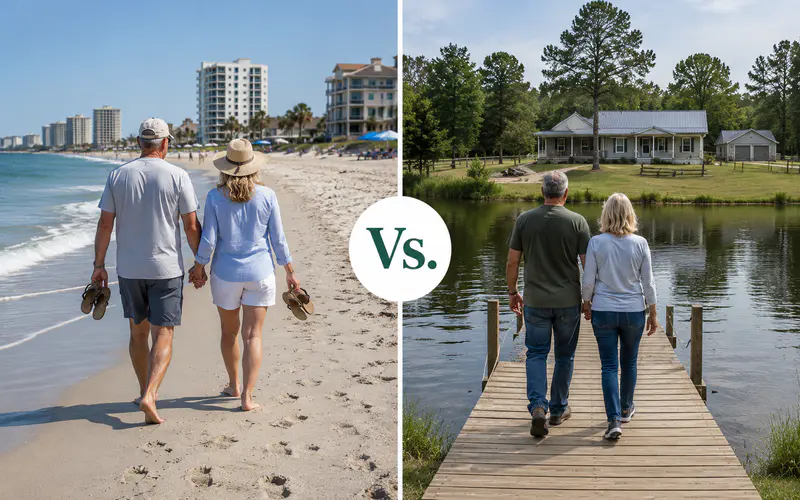
Property Types and Land Availability
Property differences become especially noticeable when comparing inland and coastal markets.
Inland areas throughout counties like Washington County, Holmes County, Jackson County, and Calhoun County often provide:
- larger lots
- rural homes
- acreage tracts
- wooded property
- agricultural land
- workshops and detached buildings
- fewer HOA-driven neighborhoods
Coastal areas may offer waterfront property, beach-access communities, planned developments, denser residential layouts, vacation-oriented housing, condos, and townhomes. Explore coastal property listings.
Neither approach is inherently better. The right fit depends on how buyers plan to use the property and what type of lifestyle they want to maintain long term.
Traffic, Tourism, and Seasonal Congestion
Tourism plays a major role in many Florida coastal markets, especially during peak travel seasons.
For some buyers, that energy and activity is part of the appeal. For others, seasonal traffic increases, tourism-driven congestion, and busier commercial corridors become factors worth considering during the home search process.
Inland communities generally experience less seasonal fluctuation and often maintain a more consistent year-round pace. Commutes, local traffic patterns, and day-to-day travel may feel more predictable in smaller inland areas compared to highly visited coastal destinations.
This difference is often important for buyers planning permanent relocation rather than vacation-oriented ownership.
Cost Considerations and Property Value Differences
Housing costs, land pricing, insurance considerations, and long-term ownership expenses can vary significantly between inland and coastal markets.
Coastal proximity often increases pricing due to demand, tourism influence, waterfront access, and limited inventory near the Gulf.
Inland properties may offer:
- more square footage
- larger lots
- acreage opportunities
- lower-density living
- additional utility structures
- lower entry pricing in some markets
At the same time, buyers evaluating inland property should carefully review septic systems, well systems, flood zones, road access, drainage, utility availability, and land usability.
Those considerations become especially important for rural and acreage-oriented property searches.
What actually differs between inland and coastal here
Hurricanes don’t stop at the beach
Hurricane Michael came ashore near Tyndall Air Force Base on October 10, 2018, as a Category 5 storm with winds of about 160 mph.
- On the coast, storm surge reached about 14 feet above normal high tide at Mexico Beach.
- Inland, Marianna recorded a gust of about 100 mph, and Jackson County reported about 400 buildings destroyed and 600 more with major damage.
The lesson for buyers is that living inland takes away storm surge and usually lowers flood exposure, but it doesn’t take away wind. The roof’s age, how it is attached, the window protection, and the big trees near the house matter in Marianna as much as in Panama City Beach.
Building near the Gulf has its own rules
On Gulf-facing beaches, Florida draws a Coastal Construction Control Line. It marks how far a 100-year storm can reach. Building or digging on the beach side of it needs a permit from the Florida Department of Environmental Protection, with special siting and design rules. That’s on top of the county’s own permits, and it applies to additions and pools as well as new homes.
Inland parcels don’t face this line. Their questions are the ones in our flood, zoning and access guides.
Insurance works differently, not just costs differently
Coastal homes in Bay County often carry a separate wind policy and a flood policy alongside the main homeowners policy, and a condo adds the association’s master policy.
Inland homes usually have simpler policies, but two things apply everywhere in Florida:
- Wind-mitigation discounts: insurers must offer discounts for features that resist wind, such as roof-to-wall connections, roof covering and opening protection. A wind-mitigation inspection documents them, so ask for one on any home you’re serious about.
- The Citizens flood rule: if the home is insured through Citizens Property Insurance, flood coverage will be required on most of its home policies by January 1, 2027, inland or not.
How far “inland” really is
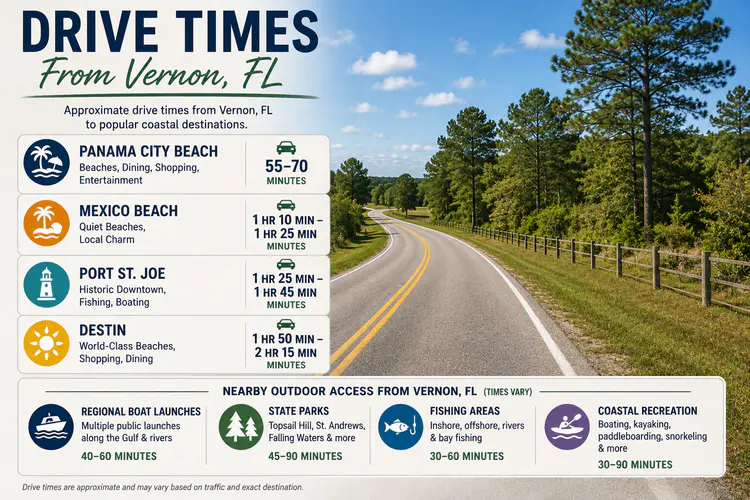
Inland doesn’t mean far. From the towns in our service area, the beach is roughly:
- Ebro: about half an hour to Panama City Beach;
- Vernon: about 50 minutes to Panama City;
- Chipley: about an hour to Panama City Beach;
- The northern towns in Holmes and Jackson counties: longer.
Many inland owners make the beach a day trip and keep the land, the quiet and the lower insurance exposure the rest of the week.
This is general information, not insurance or legal advice. An insurance agent can quote a specific property, and the county building department can tell you which rules apply to it.
Rural property infrastructure
For more detail on rural property systems, see Septic, Well, and Utility Considerations for Rural Property.
Gulf Access Without Living Directly on the Coast
One reason many buyers explore inland Panhandle communities is the ability to maintain reasonable access to Gulf Coast destinations while living outside the busiest coastal areas.
Depending on location, many inland communities remain within practical driving distance of:
- Panama City Beach
- Mexico Beach
- Port St. Joe
- Destin
- regional boat launches
- state parks
- fishing areas
- coastal recreation
For some buyers, that balance provides access to the Gulf lifestyle without requiring direct coastal living full time.
Which Buyers Often Prefer Inland Communities
Inland North Florida communities often appeal to buyers seeking:
- acreage and land
- quieter surroundings
- workshops or equipment storage
- gardening or hobby farming
- less dense neighborhoods
- more outdoor space
- slower pace of life
- practical long-term relocation environments
These areas may also appeal to military relocation buyers, remote workers, first-time acreage buyers, and buyers relocating from other rural regions who want lower-density living.
The best fit ultimately depends on the buyer's priorities, lifestyle expectations, and long-term plans for the property.
Finding the Right Fit in the Florida Panhandle
The Florida Panhandle offers a wide range of living environments, from Gulf-front communities to quieter inland areas with acreage with more rural character and larger properties.
For many buyers, the decision is not simply inland versus coastal. It is about finding the environment that best supports how they want to live day to day.
Understanding those differences early in the search process can help buyers focus on the communities, property types, and regional lifestyle that fit their goals most comfortably over the long term.
Explore North Florida service areas
If you are still comparing areas, start with the broader North Florida Panhandle service area guide, review current options on the property search page, or contact Doug Hooper with questions about inland communities, rural property, and regional fit. Buyers leaning toward coastal condo ownership can also use the Beach Condo Readiness Guide before committing to a Panama City Beach or Bay County building.
Have questions about inland Panhandle communities?
Doug Hooper REALTOR® helps buyers think through property type, location, lifestyle fit, and practical considerations across inland North Florida Panhandle communities.
Contact Doug