
Homes With Land
Homes With Acreage in North Florida
A house already on the land skips the two hardest parts of rural buying: the build timeline and the utility installation.
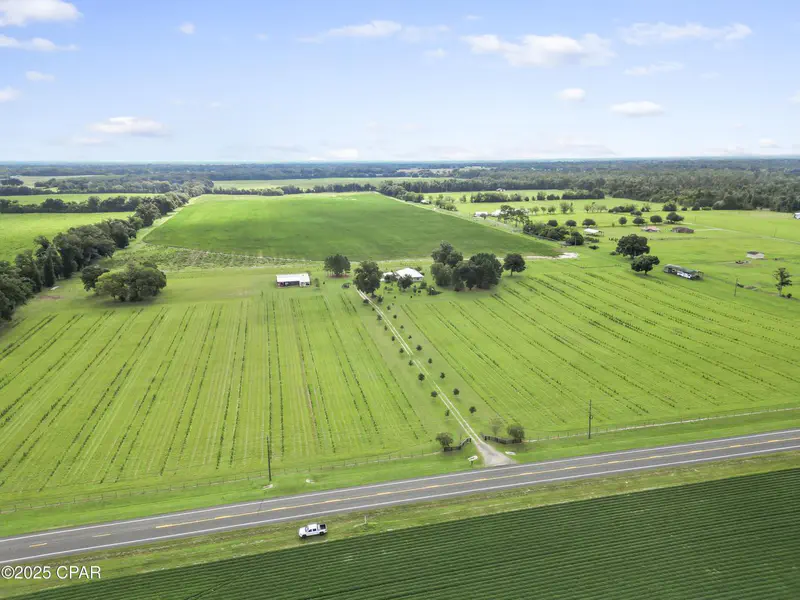
For most buyers who want space, an existing home on acreage is the practical choice over raw land. The well is drilled, the septic is in, power is connected, and the driveway exists. What you inherit instead is a house and a set of systems that need their own inspection.
Why This Route
What you skip, and what you take on
Buying raw land and building means a well, a septic system, a power extension, a driveway, a survey, permitting, and a construction timeline — often a year or more before you move in, with costs that are hard to pin down at the outset.
An existing home on acreage collapses all of that into a single purchase. The infrastructure is proven, the property taxes are established, and financing is a conventional mortgage rather than a land loan with a larger down payment.
The trade is that you inherit someone else’s decisions. A twenty-year-old septic system, a well of unknown depth and quality, outbuildings that may or may not have been permitted, and fencing in whatever condition it is in.
Inspection Priorities
What to check that a suburban buyer would not
Test for bacteria and mineral content, and ask about the pump age and depth. A well nearing end of life is a five-figure replacement.
Capacity is tied to bedroom count. If you plan to add bedrooms, the existing system may not support it. Ask for permit records and the last pump-out date.
Barns, shops, and additions are sometimes built without permits on rural property. Unpermitted structures can complicate financing, insurance, and any future sale.
If livestock is part of the plan, evaluate what exists honestly. Replacing perimeter fence on ten acres is a substantial expense.
If the land currently carries a greenbelt classification, understand what maintains it and whether it survives the sale. Losing it can raise the tax bill significantly.
By Acreage
How much land do you actually want?
The maintenance burden scales faster than most buyers expect. Be honest about equipment and time before choosing a size.
1–5 Acres With a Home
Enough for privacy, a garden, a shop, and maybe a couple of animals. Manageable with a riding mower and a weekend.
Browse 1–5 AcresHome on 5–10 Acres
Room for pasture, a barn, and real separation from neighbors. Usually the point where a tractor becomes useful.
Browse 5–10 AcresHome on 10+ Acres
Working-property scale. Livestock, timber, hunting, or simply a large buffer — with the equipment needs that follow.
Browse 10+ AcresWhere to Look
Homes with acreage by county
All five counties have inventory, but the character differs. The inland counties offer more acreage per dollar; Bay County offers coastal access at a higher price point.
Related Reading
Looking at a different kind of property?
Not every North Florida purchase already has a house on it. These two related pages cover raw vacant land and working farms and larger acreage.
Homes With Acreage Questions
Is it cheaper to buy a home on acreage or build on raw land?
Buying an existing home is usually cheaper and far more predictable. Raw land requires a well, septic system, power extension, driveway, permitting, and construction — costs that are difficult to estimate accurately upfront and typically take a year or more to complete. An existing home has all of that proven and priced in.
What financing is available for homes with acreage?
A conventional mortgage generally works, which is a meaningful advantage over raw land loans that typically require larger down payments. Very large acreage or properties with substantial agricultural income may need specialized lending. USDA rural development loans are also worth exploring in this region.
How much acreage is too much to maintain?
It depends on your equipment and how much you want the land to do. Under five acres is generally manageable with a riding mower. Beyond five to ten acres, a tractor becomes practical. Ten-plus acres in pasture requires real time or a plan to lease it, put it in timber, or let portions go natural.
Do unpermitted outbuildings matter?
They can. Unpermitted structures may complicate financing, insurance coverage, and any future resale. Ask for permit records on barns, shops, additions, and pole buildings, and factor any permitting or removal costs into your offer.
Looking for a home on land?
Tell me the acreage range, the counties you would consider, and what you want the land to do. I can narrow the search and flag the properties worth a closer look.